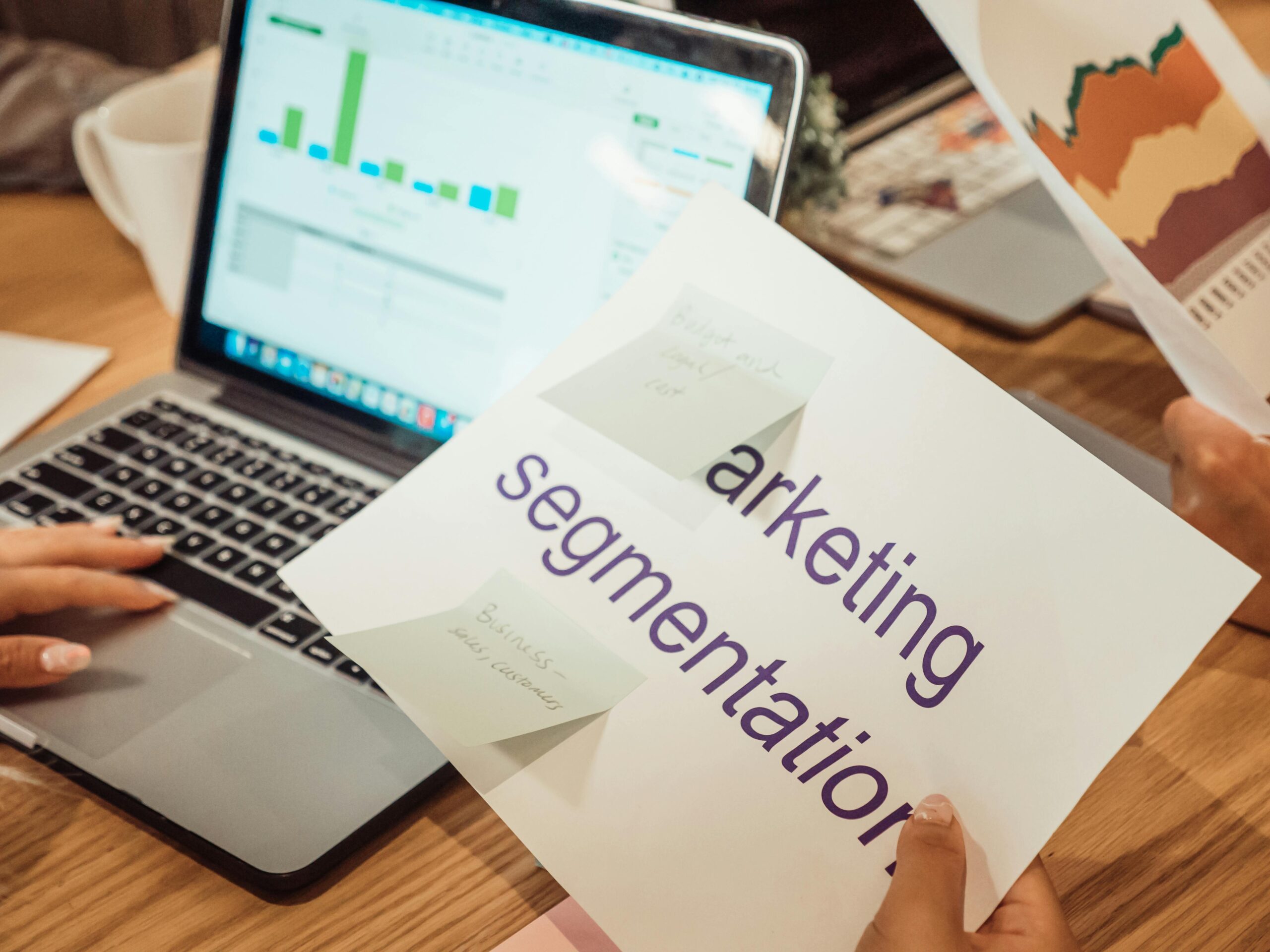
Predictive analytics is revolutionizing how businesses cut expenses and improve operations. Companies worldwide are discovering that data-driven forecasting delivers measurable competitive advantages today.

🚀 The Revolution Hidden in Your Data
Every transaction, customer interaction, and operational process generates valuable data. Yet most organizations barely scratch the surface of what this information reveals. Predictive analytics transforms raw numbers into actionable intelligence, enabling businesses to anticipate problems before they occur and identify opportunities invisible to traditional analysis methods.
The technology has evolved dramatically over recent years. What once required teams of specialized statisticians and expensive infrastructure now operates through accessible platforms and cloud-based solutions. Small businesses can leverage the same predictive capabilities that enterprise corporations use, leveling the competitive playing field in unprecedented ways.
Forward-thinking organizations are already reaping substantial rewards. Research indicates that companies implementing predictive analytics experience average cost reductions of 15-30% across various operational areas, while simultaneously improving service quality and customer satisfaction scores.
💡 Understanding Predictive Analytics Beyond the Buzzwords
Predictive analytics uses historical data, statistical algorithms, and machine learning techniques to identify the likelihood of future outcomes. Unlike descriptive analytics that simply reports what happened, or diagnostic analytics that explains why something occurred, predictive models forecast what will happen next.
The process involves collecting relevant data from multiple sources, cleaning and preparing that information, building mathematical models that recognize patterns, and then applying those models to new situations. Advanced systems continuously learn and refine their predictions as more data becomes available, creating increasingly accurate forecasts over time.
Core Components That Drive Predictive Power
Several key elements work together to create effective predictive systems. Data quality stands as the foundation—garbage in means garbage out, regardless of how sophisticated your algorithms might be. Integration capabilities ensure information flows seamlessly from all relevant sources. Processing power handles complex calculations quickly enough to deliver timely insights. Visualization tools translate mathematical outputs into understandable formats for decision-makers.
The human element remains crucial despite technological sophistication. Domain expertise helps interpret predictions within proper business context, while organizational change management ensures insights translate into actual operational improvements rather than collecting dust in reports.
💰 Cutting Costs Through Intelligent Forecasting
Predictive analytics delivers cost savings across virtually every business function. Inventory management represents one of the most impactful applications. By accurately forecasting demand patterns, companies eliminate expensive stockouts while simultaneously reducing excess inventory that ties up capital and incurs storage costs.
Maintenance operations transform completely under predictive approaches. Traditional scheduled maintenance wastes resources replacing components that still function perfectly, while reactive maintenance creates expensive emergency situations and unplanned downtime. Predictive maintenance monitors equipment conditions in real-time, scheduling interventions precisely when needed—not too early, not too late.
Energy and Resource Optimization
Manufacturing facilities and commercial buildings consume enormous amounts of energy. Predictive systems analyze usage patterns, weather forecasts, production schedules, and occupancy trends to optimize HVAC systems, lighting, and machinery operation. Companies commonly achieve 20-40% energy cost reductions through these intelligent adjustments.
Water usage, raw materials consumption, and waste generation all respond similarly to predictive optimization. The environmental benefits complement financial savings, helping organizations meet sustainability commitments while improving their bottom line.
Labor Cost Management
Staff scheduling represents a perpetual challenge balancing adequate coverage against unnecessary labor expenses. Predictive models forecast customer traffic, call volumes, transaction patterns, and workload fluctuations with remarkable accuracy. This enables precise staffing decisions that maintain service quality while eliminating overstaffing costs.
Attrition prediction helps HR departments identify employees at risk of leaving before they resign. Proactive retention efforts cost far less than recruitment, onboarding, and lost productivity associated with turnover. Organizations using predictive HR analytics report 25-50% reductions in unwanted attrition.
📈 Efficiency Gains That Compound Over Time
Beyond direct cost reductions, predictive analytics drives efficiency improvements that multiply value creation. Supply chain optimization ensures materials arrive exactly when needed, reducing delays and accelerating production cycles. Customer service departments resolve issues faster when predictive systems anticipate problems and route inquiries to properly skilled representatives.
Quality control benefits tremendously from predictive approaches. Rather than inspecting finished products and discarding defects, systems monitor production conditions in real-time and alert operators when parameters drift toward ranges that produce errors. This prevents defects rather than discovering them after wasting materials and labor.
Accelerating Decision-Making Processes
Traditional business decisions often involve lengthy committee discussions, multiple analysis rounds, and considerable uncertainty. Predictive analytics compresses decision timelines by providing clear, data-driven recommendations. Management teams can act confidently and quickly, capturing opportunities that competitors miss while they deliberate.
Risk assessment becomes more accurate and nuanced. Financial institutions use predictive models to evaluate credit applications in seconds with better accuracy than manual underwriting achieved in days. Insurance companies price policies more precisely, improving profitability while offering competitive rates to lower-risk customers.
🎯 Real-World Applications Across Industries
Retail operations pioneered many predictive analytics applications. Demand forecasting determines optimal stock levels for thousands of SKUs across multiple locations. Price optimization algorithms adjust rates dynamically based on competition, inventory levels, and demand elasticity. Recommendation engines drive significant portions of online sales by predicting which products individual customers will find appealing.
Healthcare organizations predict patient admission rates, enabling appropriate staffing and resource allocation. Readmission risk models identify which discharged patients need follow-up interventions, improving outcomes while reducing costly emergency returns. Pharmaceutical companies accelerate drug discovery by predicting which molecular compounds merit expensive laboratory testing.
Manufacturing and Industrial Operations
Production scheduling optimization balances machine capacity, material availability, energy costs, and delivery deadlines across complex manufacturing environments. Predictive quality systems detect subtle patterns indicating emerging defects before they create scrap or warranty claims. Supply chain analytics anticipate disruptions from weather events, geopolitical developments, or supplier financial difficulties.
Transportation and logistics companies optimize routes considering traffic patterns, weather conditions, delivery windows, vehicle capacity, and fuel costs. Fleet maintenance prediction reduces breakdowns that create costly service failures and customer dissatisfaction.
Financial Services Innovation
Banks detect fraudulent transactions in milliseconds by recognizing anomalous patterns across millions of daily transactions. Investment firms employ predictive models for portfolio optimization, risk management, and algorithmic trading. Customer lifetime value predictions guide acquisition spending and retention strategy development.
🔧 Implementation Strategies That Actually Work
Successful predictive analytics adoption requires more than purchasing software. Organizations must start with clearly defined business problems rather than implementing technology searching for applications. Specific use cases with measurable success criteria provide focus and enable demonstrating tangible value.
Data infrastructure assessment identifies gaps that need addressing before sophisticated analytics can succeed. This includes integration capabilities connecting disparate systems, data quality processes ensuring accuracy and consistency, and storage solutions handling volumes generated by modern operations.
Building Organizational Capabilities
Technical skills represent only one dimension of required capabilities. Data scientists and analysts need training specific to your industry and business context. Operational personnel require education on interpreting and acting on analytical insights. Leadership must understand possibilities and limitations to set realistic expectations and provide appropriate support.
Starting with pilot projects in contained areas builds competence while limiting risk. Quick wins demonstrate value and build organizational confidence. Successful pilots provide templates for broader deployment, having worked through integration challenges and change management issues on smaller scale.
Choosing Technology Partners and Platforms
The predictive analytics marketplace offers overwhelming options ranging from comprehensive enterprise platforms to specialized point solutions. Evaluation criteria should emphasize integration capabilities with existing systems, scalability to accommodate growth, and flexibility to address evolving needs. User interface design significantly impacts adoption rates—sophisticated capabilities remain unused if interfaces intimidate non-technical users.
Cloud-based solutions offer advantages for most organizations, eliminating infrastructure investments and enabling rapid scaling. Security and compliance considerations require careful evaluation, particularly for regulated industries handling sensitive data.
📊 Measuring ROI and Tracking Success
Quantifying predictive analytics value requires establishing clear baseline metrics before implementation. Cost savings calculations should include both direct expense reductions and avoided costs from prevented problems. Revenue impacts might include increased sales from better forecasting, reduced markdowns, or improved customer retention.
Efficiency improvements translate to financial benefits through capacity increases without proportional resource additions. If predictive scheduling enables handling 20% more customer transactions with existing staff, that represents significant value even without headcount reductions.
Leading and Lagging Indicators
Model accuracy metrics provide leading indicators of system effectiveness. Prediction precision, recall rates, and confidence intervals reveal whether analytical capabilities are improving over time. These technical measures should connect clearly to business outcomes that stakeholders understand and care about.
Regular business reviews examine how predictions inform actual decisions and what results those decisions produce. This feedback loop identifies opportunities for model refinement and reveals additional use cases that might benefit from predictive approaches.
🌟 Overcoming Common Implementation Challenges
Data quality issues consistently rank as the primary obstacle to successful predictive analytics. Incomplete records, inconsistent formatting, and siloed information scattered across incompatible systems prevent effective analysis. Addressing these problems requires dedicated effort but pays dividends across all analytical applications, not just predictive models.
Organizational resistance stems from various sources. Employees may fear that automation threatens their jobs. Managers accustomed to intuition-based decisions might distrust mathematical models they don’t fully understand. Effective change management communicates how analytics augments rather than replaces human judgment while providing training that builds comfort and competence.
Balancing Sophistication and Practicality
The temptation to implement cutting-edge algorithms sometimes outpaces organizational readiness. Overly complex models become “black boxes” that users don’t trust and can’t effectively troubleshoot when predictions seem incorrect. Starting with interpretable models that clearly show how variables influence predictions builds confidence before advancing to more sophisticated approaches.
Perfect predictions remain impossible—uncertainty exists in all future-oriented analysis. Setting appropriate expectations about accuracy ranges and confidence levels prevents disappointment while enabling informed decision-making that accounts for residual uncertainty.
🔮 The Competitive Advantage of Early Adoption
Organizations implementing predictive analytics today gain advantages that compound over time. Systems learn and improve continuously as they process more data and operators become increasingly skilled at leveraging insights. This creates widening gaps between analytical leaders and companies still operating on intuition and lagging indicators.
Market dynamics increasingly reward speed and precision in decision-making. Customer expectations rise constantly as digital leaders set new service standards. Cost pressures intensify as efficiency leaders discover additional optimization opportunities. Companies delaying analytical adoption find themselves competing with disadvantages across multiple dimensions simultaneously.
The good news is that entry barriers have never been lower. Cloud platforms, open-source tools, and specialized consultancies make sophisticated capabilities accessible to organizations of all sizes. The question isn’t whether to adopt predictive analytics, but how quickly you can implement effectively and begin capturing benefits.

🚀 Taking Your First Steps Toward Predictive Excellence
Begin by identifying high-impact, relatively contained opportunities where predictive analytics can deliver measurable value quickly. Inventory optimization, maintenance scheduling, or demand forecasting represent excellent starting points for many organizations. Success in initial projects builds momentum and organizational capability for tackling more complex applications.
Assemble cross-functional teams combining technical expertise, domain knowledge, and operational experience. This diversity ensures analytical models address real business problems and that insights translate into practical operational improvements. Executive sponsorship provides necessary resources and helps overcome organizational obstacles.
Invest in data infrastructure and quality processes that provide foundations for long-term analytical capabilities. Short-term shortcuts create technical debt that eventually constrains what’s possible and how quickly you can advance. Building proper foundations enables accelerating capability development over time rather than constantly addressing accumulated technical limitations.
The future belongs to organizations that harness data and analytics to continuously optimize operations and anticipate change. Predictive analytics represents not merely a technological capability but a fundamental shift in how successful businesses operate. Companies embracing this transformation today unlock competitive advantages that drive sustained superior performance tomorrow.
Your competitors are already exploring these capabilities. Market leaders are extending their advantages through analytical sophistication. The opportunity to join the winners rather than getting left behind exists right now, but that window won’t remain open indefinitely. The time to unlock tomorrow’s savings by implementing predictive analytics is today.