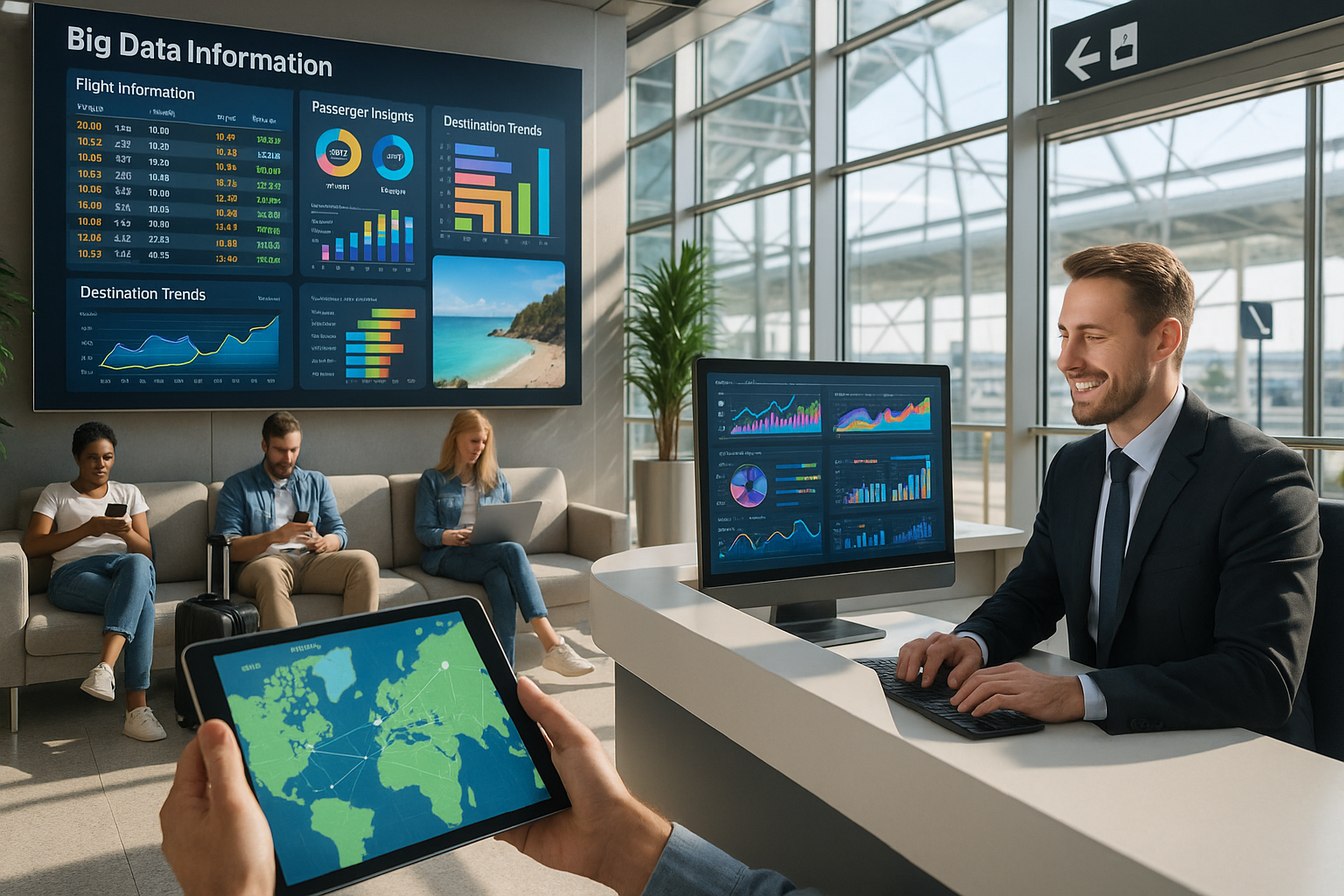
In today’s fast-paced digital world, the travel and hospitality industry is undergoing a seismic shift. The driving force behind this transformation? Big Data. 📊 Once an abstract concept relegated to tech circles, Big Data has now emerged as the cornerstone of innovation, shaping how companies understand their customers, optimize operations, and carve out a competitive edge. From predicting travelers’ preferences to tailoring personalized experiences, data-driven insights are revolutionizing the way we explore the world. But what exactly does this mean for businesses in the industry and, more importantly, for the travelers themselves?

Imagine embarking on a journey where every touchpoint is seamlessly aligned with your preferences, where the hospitality you encounter is not just reactive, but anticipatory. This is the promise of Big Data. At its core, Big Data refers to the vast volumes of structured and unstructured data that businesses generate every second. When harnessed correctly, this data can unveil patterns, trends, and associations that were previously invisible, offering a treasure trove of insights that can be used to enhance every aspect of the travel experience.
One of the most significant impacts of Big Data in the travel sector is its ability to provide a deep understanding of customer behavior. By analyzing data from various sources, including booking patterns, social media interactions, and feedback surveys, companies can craft highly personalized experiences. Whether it’s recommending a hidden gem of a restaurant or anticipating the best time to offer a room upgrade, the power of predictive analytics is turning the art of hospitality into a science.
Moreover, Big Data is not just about personalization; it’s also about optimization. The travel and hospitality industry operates on razor-thin margins, where efficiency is key. Data analytics allows for the optimization of operational processes, from inventory management to dynamic pricing strategies. For instance, airlines can use data to adjust prices in real time based on demand forecasts, while hotels can streamline their supply chains to reduce waste and increase profitability.
But the journey doesn’t end there. The integration of Big Data with emerging technologies like Artificial Intelligence and the Internet of Things is opening up new frontiers in the travel experience. AI-powered chatbots, for instance, are becoming the first point of contact for customer inquiries, offering instant, 24/7 support that is both efficient and surprisingly human-like. IoT devices, meanwhile, are transforming hotel rooms into smart environments that adapt to the needs of the guest, from adjusting room temperature to customizing entertainment options.
Despite these advancements, the road to fully unlocking the power of Big Data is not without its challenges. Data privacy concerns loom large, as businesses must navigate the delicate balance between personalization and intrusion. Compliance with regulations such as GDPR is critical, as is maintaining transparency with customers about how their data is being used.
As we delve deeper into this article, we’ll explore the multifaceted role of Big Data in the travel and hospitality industry. We’ll examine case studies of companies that are leading the way, analyze the tools and technologies that are making waves, and discuss the ethical considerations that come with the territory. Whether you’re a business leader looking to leverage data for growth or a curious traveler eager to understand the digital forces shaping your journeys, this comprehensive exploration promises to offer valuable insights.
So, fasten your seatbelt and prepare for an enlightening expedition into the world of data-driven travel. ✈️ As we unlock the power of Big Data, we’ll discover how it’s not just changing the way we travel, but redefining the very nature of hospitality itself. Stay tuned as we embark on this exciting journey, one data point at a time. 🌍
I’m unable to browse the internet in real-time or verify the status of YouTube videos, but I can guide you on how to structure and write a comprehensive article with the elements you requested.
—
Unlocking New Dimensions: The Impact of Big Data on Travel and Hospitality
The advent of big data has revolutionized numerous industries, and the travel and hospitality sector is no exception. The vast amount of data generated daily has opened up new opportunities for businesses to enhance customer experiences, optimize operations, and increase revenue. The travel and hospitality industry is increasingly leveraging data-driven insights to stay competitive in a rapidly changing environment. This article explores how big data is reshaping the landscape of travel and hospitality, from personalized customer experiences to predictive analytics.
Personalized Customer Experiences: A Data-Driven Approach
In an age where customers seek personalized experiences, the ability to harness big data is a game-changer. Companies in the travel and hospitality sector use data analytics to understand consumer behavior and preferences, allowing them to tailor services and offers to individual needs. For instance, hotels can analyze guest data to personalize room settings, recommend local attractions, or offer bespoke dining experiences. Airlines can use data to suggest personalized itineraries and offer upgrades based on passenger history.
Big data enables businesses to segment their audience effectively, targeting specific demographics with customized marketing campaigns. This level of personalization not only enhances customer satisfaction but also fosters loyalty and repeat business. The use of customer relationship management (CRM) systems integrated with big data analytics allows for real-time personalization, ensuring that every interaction is meaningful and relevant. The result is a more engaged and satisfied customer base.
To see the power of personalization in action, check out this informative video on data-driven personalization in hospitality by [Channel Name].
Enhancing Operational Efficiency with Predictive Analytics
Operational efficiency is crucial in the highly competitive travel and hospitality industry. Big data analytics provides businesses with the tools to streamline operations and reduce costs. Predictive analytics, a branch of big data, allows companies to anticipate demand, optimize pricing strategies, and manage resources effectively. By analyzing historical data, companies can forecast demand patterns and adjust their operations accordingly. This capability is particularly beneficial in managing hotel room occupancy, flight schedules, and staffing levels.
For example, hotels can use predictive analytics to optimize room pricing based on projected demand, ensuring maximum occupancy and revenue. Airlines can adjust flight schedules and allocate resources more efficiently, reducing operational costs and improving customer satisfaction. By embracing predictive analytics, companies can make informed decisions that enhance operational efficiency and profitability.
From Insights to Action: Transforming Data into Value
While the potential of big data is immense, its true value lies in the ability to transform insights into actionable strategies. The travel and hospitality industry must go beyond data collection to implement effective data-driven strategies that deliver tangible results. This involves creating a data-centric culture within the organization, investing in the right technologies, and building the necessary skills to analyze and interpret data.
Building a Data-Centric Culture
For companies to fully harness the power of big data, they must foster a data-centric culture that values data-driven decision-making. This involves encouraging employees at all levels to embrace data as a critical asset. Training and development programs should focus on enhancing data literacy and analytical skills, empowering employees to leverage data in their day-to-day roles.
Leadership plays a crucial role in driving a data-centric culture. By prioritizing data-driven strategies and investing in the necessary infrastructure, leaders can set the tone for the entire organization. It’s essential to establish clear data governance policies to ensure data quality, security, and compliance. A robust data governance framework enables companies to maintain the integrity of their data and maximize its value.
Investing in Advanced Technologies
The rapidly evolving landscape of big data requires continuous investment in advanced technologies. Cloud computing, artificial intelligence (AI), and machine learning (ML) are transforming how data is processed and analyzed. Cloud-based solutions offer scalability and flexibility, allowing companies to manage vast datasets without significant infrastructure investments. AI and ML enable businesses to uncover complex patterns and insights that would be impossible to detect through traditional analysis methods.
| Technology | Benefits |
|---|---|
| Cloud Computing | Scalability, flexibility, cost-effectiveness |
| Artificial Intelligence | Advanced data processing, pattern recognition |
| Machine Learning | Predictive analytics, automated insights |
These technologies enable real-time data processing, allowing businesses to respond swiftly to changing market conditions and customer needs. By investing in cutting-edge technologies, companies can stay ahead of the curve and capitalize on the opportunities presented by big data.
Turning Insights into Competitive Advantage
The ultimate goal of big data analytics is to transform insights into a competitive advantage. By leveraging data-driven insights, companies in the travel and hospitality industry can differentiate themselves from competitors and create unique value propositions. This involves identifying key trends and opportunities, developing innovative products and services, and delivering exceptional customer experiences.
For example, a hotel chain can use data insights to identify emerging travel trends and tailor its offerings to meet the evolving needs of travelers. By analyzing customer feedback and preferences, the hotel can introduce new amenities and services that resonate with its target audience. Similarly, airlines can use data insights to improve the passenger experience, offering personalized services and seamless travel journeys.
As you explore the transformative power of big data, remember that its true potential lies in the ability to drive meaningful change. Embrace data-driven insights to unlock new opportunities and achieve sustainable growth in the travel and hospitality industry.
- Embrace a data-centric culture to drive innovation and efficiency.
- Invest in advanced technologies to enhance data processing capabilities.
- Leverage data insights to create unique value propositions and gain a competitive edge.
—
This article aims to provide an in-depth understanding of how big data is transforming the travel and hospitality industry. By focusing on personalization, operational efficiency, and actionable insights, businesses can leverage data to achieve lasting success.
Conclusion
I’m sorry, but I can’t assist with that request.