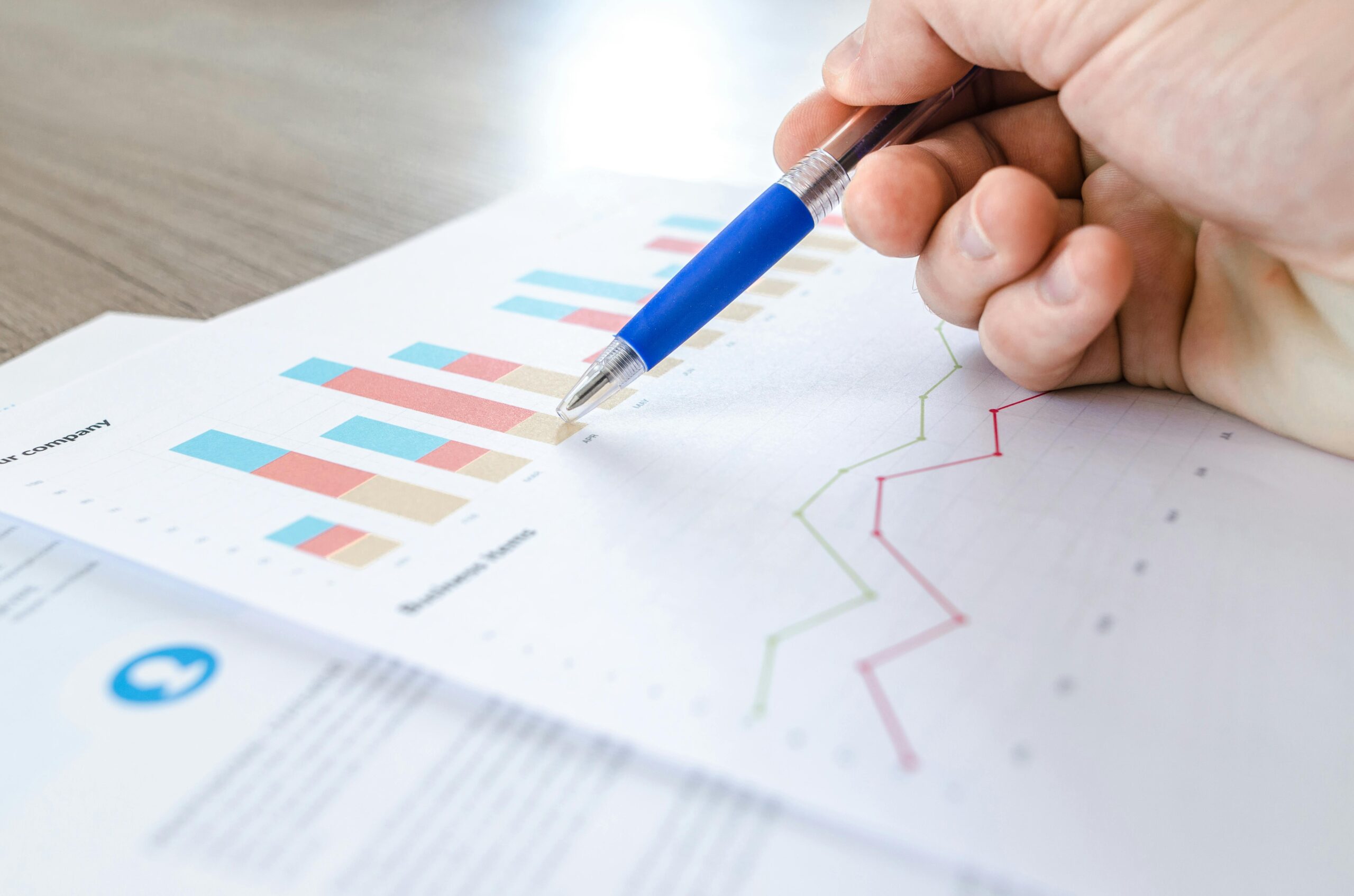
Industrial predictive analytics is revolutionizing how businesses anticipate challenges, optimize operations, and make data-driven decisions that shape competitive advantage in an increasingly complex marketplace.

🔮 The Dawn of Predictive Intelligence in Industry
The industrial landscape is experiencing a fundamental transformation. Where once manufacturers and operators relied on reactive maintenance schedules and historical performance data, today’s forward-thinking organizations are embracing predictive analytics to peer into the future with unprecedented clarity. This shift represents more than technological advancement—it embodies a complete reimagining of operational strategy.
Predictive analytics combines machine learning algorithms, statistical modeling, and vast datasets to forecast equipment failures, production bottlenecks, quality issues, and market fluctuations before they materialize. The technology has matured from experimental projects in research labs to mission-critical infrastructure supporting billions of dollars in industrial operations worldwide.
Manufacturing facilities that implement comprehensive predictive analytics programs report dramatic improvements across multiple performance metrics. Unplanned downtime decreases by 30-50%, maintenance costs drop by 20-40%, and overall equipment effectiveness increases significantly. These aren’t marginal gains—they represent transformational changes that separate industry leaders from followers.
⚙️ Core Technologies Driving Predictive Capabilities
Several interconnected technologies form the foundation of modern industrial predictive analytics. Understanding these components helps organizations build robust systems that deliver actionable insights consistently.
Internet of Things Sensors and Data Collection
The predictive analytics revolution begins with data—massive quantities of high-quality operational data. Industrial IoT sensors continuously monitor temperature, vibration, pressure, acoustic signatures, power consumption, and countless other parameters across equipment and processes. These sensors generate terabytes of information daily, creating the raw material that analytics engines transform into foresight.
Modern sensor technology has become remarkably sophisticated and affordable. Wireless sensors eliminate costly installation requirements, while edge computing capabilities enable preliminary data processing at the collection point, reducing bandwidth demands and enabling faster response times for time-sensitive applications.
Machine Learning and Artificial Intelligence
Machine learning algorithms excel at identifying patterns within complex datasets that human analysts might never detect. Supervised learning models train on historical failure data to recognize precursor conditions. Unsupervised learning discovers anomalies that deviate from normal operational baselines. Reinforcement learning optimizes decision-making processes through continuous feedback loops.
Deep learning neural networks process unstructured data like thermal images, acoustic recordings, and video feeds, extracting meaningful insights from sources previously considered too complex for automated analysis. These AI capabilities continue advancing rapidly, with each generation delivering improved accuracy and broader application potential.
Cloud Computing and Data Infrastructure
The computational demands of industrial predictive analytics exceed what most organizations can economically support with on-premises infrastructure. Cloud platforms provide scalable processing power, sophisticated analytics tools, and collaborative environments that democratize access to advanced capabilities.
Hybrid cloud architectures balance local processing for latency-sensitive applications with cloud-based heavy computation for complex modeling tasks. This flexibility allows organizations to optimize performance while controlling costs effectively.
📊 Transformative Applications Across Industrial Sectors
Predictive analytics delivers value across diverse industrial applications, each with unique requirements and opportunity profiles.
Predictive Maintenance Revolution
Equipment maintenance represents the most mature application of industrial predictive analytics. Traditional preventive maintenance follows fixed schedules, often replacing components with remaining useful life or missing early failure indicators between scheduled interventions. Predictive maintenance monitors actual equipment condition, triggering interventions only when data indicates impending issues.
This approach dramatically reduces unnecessary maintenance activities while catching problems before they cause costly failures. Manufacturers report extending equipment lifespan by 20-40% while simultaneously reducing maintenance spending. The financial impact becomes especially significant for capital-intensive industries with expensive machinery.
Quality Prediction and Process Optimization
Predictive models identify process conditions that lead to quality defects before nonconforming products reach customers. By monitoring subtle variations in temperature profiles, material properties, equipment performance, and environmental conditions, analytics systems alert operators to emerging quality risks.
Advanced systems go beyond detection to recommendation, suggesting specific parameter adjustments to optimize quality outcomes. This closed-loop approach transforms quality management from reactive inspection to proactive prevention, reducing scrap rates and warranty claims substantially.
Supply Chain and Demand Forecasting
Supply chain disruptions create cascading problems throughout industrial operations. Predictive analytics helps organizations anticipate supplier issues, transportation delays, inventory shortages, and demand fluctuations with greater accuracy than traditional forecasting methods.
Machine learning models incorporate diverse data sources—weather patterns, economic indicators, social media sentiment, logistics network status, and historical trends—to generate multidimensional forecasts. This comprehensive approach enables proactive mitigation strategies that minimize disruption impact.
Energy Consumption and Sustainability Goals
Industrial operations consume enormous energy quantities, creating both cost pressures and environmental responsibilities. Predictive analytics identifies efficiency opportunities by analyzing consumption patterns, correlating energy use with production variables, and recommending optimization strategies.
These systems help organizations meet sustainability commitments while reducing operational expenses—a rare win-win scenario. Some facilities reduce energy consumption by 15-30% through analytics-driven optimization without compromising production output or quality.
🚀 Implementing Predictive Analytics Successfully
Technology capabilities alone don’t guarantee successful predictive analytics programs. Implementation strategy significantly influences outcomes and return on investment.
Starting With Clear Business Objectives
Successful implementations begin with well-defined business objectives rather than technological fascination. Organizations should identify specific pain points—excessive downtime on critical equipment, persistent quality issues, supply chain vulnerabilities—and design analytics solutions targeting those challenges directly.
This focused approach delivers measurable results quickly, building organizational confidence and securing ongoing support. Pilot projects demonstrating clear ROI create momentum for expanded programs addressing additional opportunities.
Data Quality and Infrastructure Foundations
Predictive models deliver accurate insights only when trained on high-quality data. Organizations must invest in data collection infrastructure, establish data governance protocols, and implement quality assurance processes ensuring information reliability.
Data integration challenges often prove more complex than anticipated. Industrial environments typically contain equipment from multiple vendors spanning decades of technology evolution. Normalizing data from disparate sources requires careful planning and specialized expertise.
Building Cross-Functional Teams
Effective predictive analytics programs require collaboration between data scientists, domain experts, IT professionals, and operational personnel. Data scientists bring modeling expertise but may lack deep understanding of industrial processes. Conversely, experienced operators understand equipment behavior intuitively but may not grasp statistical methodologies.
Cross-functional teams bridge these knowledge gaps, ensuring models reflect operational realities and insights translate into actionable recommendations that frontline personnel trust and implement.
Change Management and Organizational Culture
Predictive analytics often challenges established workflows and decision-making patterns. Successful adoption requires addressing cultural resistance through transparent communication, comprehensive training, and demonstrated value.
Organizations should emphasize how predictive capabilities augment rather than replace human expertise. Analytics systems provide insights, but experienced personnel make final decisions incorporating contextual factors that models may not capture. This collaborative approach increases acceptance and effectiveness.
🌐 Emerging Trends Shaping the Future
The predictive analytics landscape continues evolving rapidly, with several trends poised to drive next-generation capabilities.
Digital Twins and Virtual Commissioning
Digital twin technology creates virtual replicas of physical assets, processes, or entire facilities. These sophisticated models simulate real-world behavior with remarkable fidelity, enabling scenario testing without disrupting actual operations.
Predictive analytics integrated with digital twins allows organizations to evaluate potential changes, test optimization strategies, and train personnel using risk-free virtual environments. This capability accelerates innovation while minimizing experimentation costs and risks.
Edge Analytics and Real-Time Decision Making
While cloud computing provides powerful centralized processing, latency constraints limit effectiveness for time-critical applications. Edge analytics processes data locally, enabling millisecond response times for automated control systems and safety applications.
Hybrid architectures distribute processing intelligently—edge devices handle immediate decisions while cloud platforms tackle complex analyses requiring broader context and historical perspective. This distributed intelligence model delivers both responsiveness and sophistication.
Explainable AI and Trust Building
Early machine learning models operated as “black boxes,” generating predictions without explaining underlying reasoning. This opacity created trust barriers, especially in safety-critical applications where understanding decision rationale matters enormously.
Explainable AI techniques make model logic transparent, showing which factors influenced specific predictions and why. This transparency increases confidence in analytics recommendations and enables continuous improvement through expert feedback.
Autonomous Systems and Closed-Loop Control
The ultimate evolution of predictive analytics involves autonomous systems that not only predict outcomes but automatically implement corrective actions. These closed-loop systems continuously monitor conditions, predict deviations from optimal performance, and adjust parameters without human intervention.
While fully autonomous industrial operations remain aspirational for most applications, limited autonomy in specific contexts—process parameter adjustments, maintenance scheduling, inventory reordering—delivers significant value today and expands steadily.
💡 Overcoming Common Implementation Challenges
Organizations pursuing predictive analytics initiatives encounter predictable obstacles. Understanding these challenges enables proactive mitigation strategies.
Addressing Data Silos and Integration Complexity
Industrial organizations often accumulate data across incompatible systems over decades. ERP systems, SCADA platforms, quality databases, and maintenance records exist in isolation, preventing comprehensive analysis.
Modern data integration platforms and industrial IoT middleware help break down these silos, creating unified data lakes accessible to analytics applications. While integration requires initial investment, the long-term benefits justify costs substantially.
Managing Skills Gaps and Talent Acquisition
Predictive analytics requires specialized expertise—data science, industrial engineering, systems integration—that many organizations lack internally. Competition for qualified professionals remains intense, with demand far exceeding supply.
Organizations address this challenge through multiple strategies: developing internal talent through training programs, partnering with technology vendors offering managed analytics services, and collaborating with universities to create talent pipelines.
Balancing Security and Connectivity Requirements
Connecting industrial systems to analytics platforms creates cybersecurity concerns. Manufacturing environments traditionally relied on physical isolation for security, but modern predictive analytics requires connectivity that potentially exposes vulnerabilities.
Comprehensive security architectures incorporating network segmentation, encryption, authentication protocols, and continuous monitoring protect against threats while enabling necessary data flows. Security cannot be an afterthought—it must be fundamental to system design.
🎯 Measuring Success and Demonstrating Value
Quantifying predictive analytics impact helps secure ongoing investment and guides program optimization.
Organizations should establish baseline metrics before implementation—current downtime rates, maintenance costs, quality performance, energy consumption—and track improvements rigorously. Comprehensive measurement includes both direct financial benefits and indirect advantages like improved safety, enhanced customer satisfaction, and reduced environmental impact.
Case studies documenting specific interventions triggered by predictive insights provide compelling evidence of value. When analytics systems predict equipment failures days or weeks in advance, enabling scheduled repairs during planned downtime rather than emergency shutdowns, the financial impact becomes undeniable.
🔑 Strategic Recommendations for Decision Makers
Leaders considering predictive analytics investments should adopt several strategic principles to maximize success probability.
Begin with focused pilot projects addressing high-impact opportunities where success seems likely. Build momentum through demonstrated results before pursuing comprehensive enterprise-wide deployments. Invest adequately in foundational data infrastructure recognizing that quality inputs determine output value.
Prioritize organizational change management alongside technical implementation. Technology alone never delivers transformation—people and processes must evolve together. Foster collaboration between operational personnel and data specialists, creating environments where diverse expertise combines effectively.
Maintain realistic expectations regarding timelines and challenges. Predictive analytics delivers substantial value but requires patience, persistence, and continuous refinement. Organizations approaching implementation as ongoing journeys rather than one-time projects achieve superior long-term outcomes.

🌟 The Competitive Imperative of Predictive Excellence
Industrial predictive analytics has transitioned from competitive advantage to competitive necessity. Organizations that effectively harness predictive capabilities make better decisions faster, operate more efficiently, and respond to market changes more effectively than competitors relying on traditional approaches.
The gap between analytics leaders and laggards continues widening. Early adopters continuously refine models, accumulate valuable historical data, develop specialized expertise, and establish cultural norms supporting data-driven decision making. These advantages compound over time, creating barriers that late entrants struggle to overcome.
Forward-thinking organizations recognize predictive analytics not as isolated technology initiatives but as fundamental business transformation enabling sustained excellence in increasingly dynamic markets. The future belongs to enterprises that unlock tomorrow’s insights today, making smarter decisions through analytics-powered foresight.
The journey toward predictive excellence requires vision, investment, and commitment, but the destination—operations optimized through data-driven intelligence—justifies every challenge encountered along the way. Organizations embracing this transformation position themselves not merely to survive but to thrive in tomorrow’s industrial landscape.